
Finding Madison Residents
A Madison residents directory search works best when it starts with the fact already known. A name points first to an owner search, a court party index, a state license board, or a business filing. An address points to City GIS, the county tax roll, and then a deed. An old address belongs in deeds, directories, telephone books, and released census schedules. No one source is a full household roll. Property data names owners, while a tax mailing address may be somewhere else. Voter material is limited by law. Renters and relatives may not appear at all.
Madison also requires a county check before a land search. The incorporated city crosses Madison and Limestone Counties. Postal wording does not resolve that split. City records cover city functions, but tax, deed, probate, and county court files follow the correct county. A short source-first method avoids false matches:
- Use the city parcel and limit layers to place the address and county.
- Search that county's property roll by owner name, address, PIN, or parcel.
- Follow the current deed through the Probate Judge's grantor and grantee index.
- Check voter, court, business, or license records only when they answer the question.
- Move to a counter, written request, library, or archive when the online trail ends.
The result should be a set of linked facts, not a claim that one hit proves where a person lives. Two independent identifiers, such as a parcel number and deed reference or a case number and middle initial, make a much sounder match.
Madison Resident Records Offices
Several keepers supply the official pieces behind a Madison residents directory. The Probate Judges record land transfers and keep estate files. County property offices connect owner names with parcels, values, exemptions, situs addresses, and mailing addresses. The Madison City Clerk manages city records, cemetery files, election material, minutes, and public requests. These offices are not interchangeable. Western parcels must follow Limestone County, while most other Madison parcels follow Madison County. The full by-address sequence belongs in the Madison street directory.
Madison County Tax Assessor
1918 N Memorial Parkway
Huntsville, AL
256-532-3350
Limestone County Probate Judge
100 S. Clinton Street, Suite D
Athens, AL 35611
256-233-6427
Counter access matters. Madison County's historic Probate archive is open Monday, Wednesday, and Friday from 9 a.m. to 3 p.m.; Tuesday and Thursday visits require an appointment. Limestone County Probate is open weekdays from 8 a.m. to 4:30 p.m. Those channels bridge books and files that a web portal may not show.
Madison's Two Record Trails
County Line Road is more than a local place name. Madison's westward growth extends into Limestone County, so a city address can lead to Athens rather than Huntsville for deeds, assessments, probate, and county court records. ZIP codes 35756, 35757, and 35758 do not settle that question. Annexation can also change city service jurisdiction without changing the postal label. The city's parcel and city-limit layers are the first check because they show the geographic context before a name search begins.
The correct path is simple: map the parcel, note its county, capture the PIN and legal description, and then stay with that county's offices. On the Limestone side, the Revenue Commissioner accepts name, parcel number, or address searches. Probate supplies land and estate records, while the Limestone County Archives adds more than 350,000 name entries across more than 6,000 books and files dating to the county's 1818 start.
Open the Limestone land and probate landing page before using the western branch of the Madison directory.
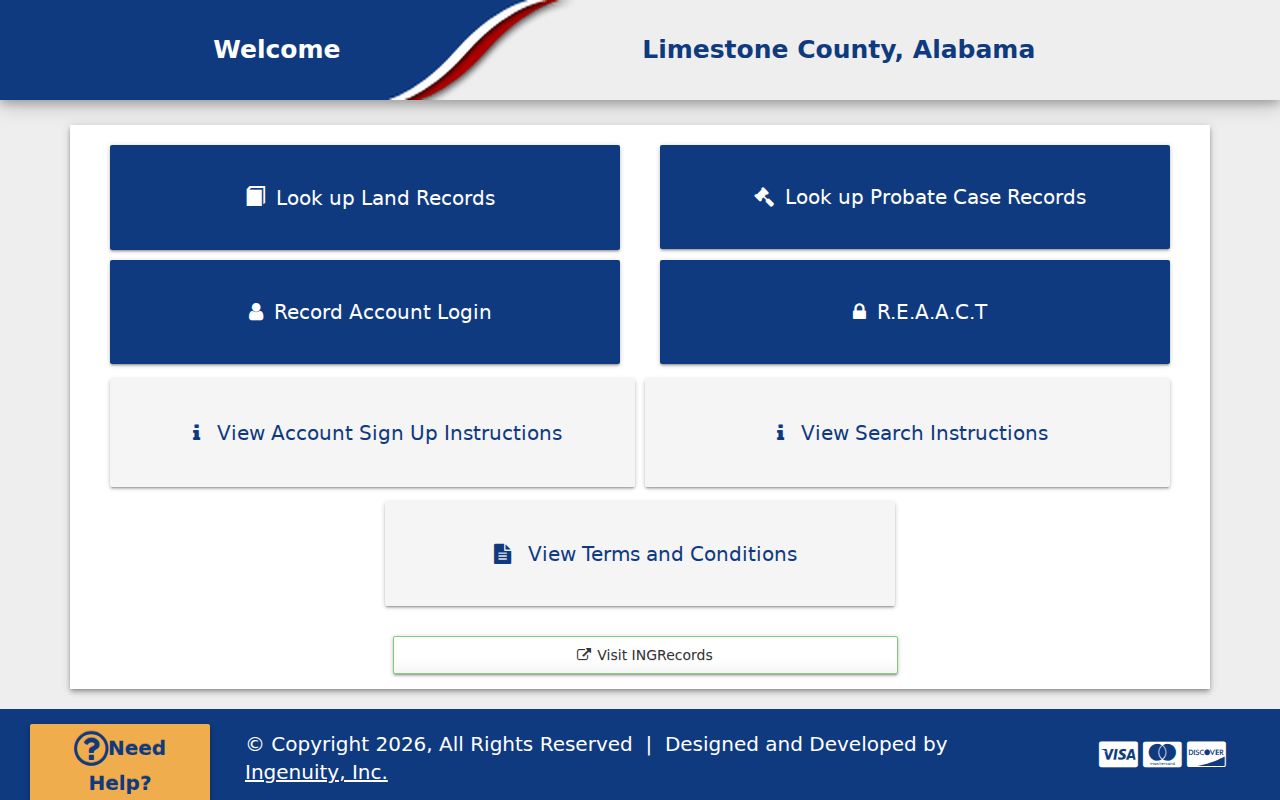
The separate land-record and probate-case choices show why a western Madison parcel must be routed by county instead of ZIP code.
Madison Property Lookup Fields
The Madison County Tax Assessor's AssuranceWeb search is often the quickest name-to-address bridge. It is a property roll, not proof of occupancy. The result can show an owner, parcel or PIN, situs address, mailing address, tax year, subdivision, legal description, values, exemptions, and improvement data. Situs means where the land sits. Mailing means where the tax notice goes. A homestead exemption can support owner occupancy for an assessment date, yet it still does not list the full household.
| Search control | Available entry or choice | Use in a Madison lookup |
|---|---|---|
| Tax Year | Choose an available year | Keep the owner fact tied to its assessment period |
| Search By | Name, PIN, Company, Parcel, Account, Subdivision, Address | Switch paths when one identifier is incomplete |
| Name mode | Last Name Starts With or Contains; optional first name | Test spelling variants and initials |
| Output | Search and Print Results | Record the PIN, situs, mailing address, and deed clue |
Once the parcel is certain, the City/Madison County parcel service adds previous owners, neighborhood, subdivision, lot and block, deed type, book, page, and date. Those are pivots into the deed index. They do not turn the tax service into a resident roll.
- Parcel
- A mapped unit of land tracked by a county identifier.
- Index
- A finding list that points to a filed record; it may not include the document image.
- Roll
- An official list maintained for a specific public purpose, such as assessment or voting.
- Criss-cross directory
- A directory arranged by address or telephone number rather than only by surname.
Madison Records Beyond the Portal
When an online search fails, the next step is the custodian, not a conclusion that no record exists. Madison County says old assessment records and plat books reach into the 1800s. Probate accepts archive appointments, and a written Circuit Clerk request can specify a case number, date of birth, alias, and the exact record sought. HMCPL Special Collections requires in-person city-directory research and does not answer those questions by phone. Each fallback supplies material that the web view may omit.
City records use another route. Madison public-record requests are handled in receipt order through the City Clerk. Effective March 23, 2026, Ordinance 2026-109 sets a nonrefundable $25 minimum for the first labor hour and $25 for each added hour, rounded upward. Ordinary pages cost $0.25 each, with added labor when research exceeds 15 minutes. Payment comes before release. The city has no single response deadline posted for every request. Alabama Executive Order 734 supplies separate timing and fee guidance for executive agencies, not one universal local deadline.
Search tip. Ask for a named record, date range, address, case, parcel, or department so staff can identify the source without guessing.
Current Madison Resident Directories
Current Madison directory sources are purpose-built rolls. Each answers a narrow question. The property roll links an owner to land. A voter self-lookup confirms registration and district context. Deeds identify parties to a transfer. Court dockets identify parties in a case. Business and license databases show formal roles or credentials, not home life. Choosing the source by its public purpose cuts down same-name errors.
| Madison source | Person or role shown | Official keeper | Access route |
|---|---|---|---|
| Assessment roll | Owner and tax-mail recipient | County assessor or revenue office | Free portal and counter |
| Recorded documents | Grantor, grantee, and other filing parties | County Probate Judge | Account portal, counter, archive |
| Voter registration | The person checking registration; permitted list fields | Alabama election officials | Personal lookup or paid list request |
| Trial-court index | Named case parties and roles | Municipal or Circuit/District clerk | Portal, counter, written request |
| Entity and license records | Officer, agent, incorporator, or credential holder | Secretary of State or profession board | Free official search |
A one-person search should compare at least two sources and keep dates attached to every fact. The detailed sequence appears in the Madison resident lookup. The Alabama DOC locator is limited to current prisoners and caps broad results, so it is neither a historical roll nor a household directory. No current official source gives a complete list of all Madison household members.
Madison Voter Directory Limits
Alabama Votes is the official personal registration, polling-place, and district service. A registration record is civic evidence, not a public household directory. Alabama does not maintain permanent party registration, and participation history shows only that someone took part in an election, never how a ballot was cast. State database documentation describes name, home address, home phone, and participation in the past ten elections, but that does not mean every maintained field is released in every setting.
Protection rules are vital. Under Ala. Code §17-4-33(b), qualifying protected voters and domestic-violence survivors can keep residence and mailing addresses off public lists while the name remains. A citywide Madison search must also respect the county split because state and federal registration follows the resident's county. The City Clerk handles municipal election material, while the self-lookup is not a block browser.
Lawful use. Madison records may support family, estate, civic, and property research. Never use a directory lead to stalk, harass, or track a person.
Confirming Madison Court Names
Madison court records sit with several custodians. The Municipal Court handles city misdemeanor and traffic matters. Madison and Limestone County Circuit and District Courts keep county trial files. Probate Courts handle estates, wills, guardianships, and land-related probate work. Federal matters belong to the Northern District of Alabama. A search of only one system cannot rule out a record in another.
Alacourt and Just One Look provide statewide trial-court access, but a clerk request is the fallback for a specified file. Capture the court, division, filing date, case number, party role, and disposition before ordering a document. The Madison Circuit Clerk asks for precise record details and allows a date of birth or alias to reduce same-name collisions. Sealed, expunged, juvenile, adoption, and other protected cases may be missing by design. An absent hit proves very little.
Estate records are especially useful for heir research. Petitions and notices may name a personal representative, known heirs, and claimants. Those records belong with the Probate Judge rather than the ordinary civil docket.
Madison Vital Record Boundaries
Alabama vital records have firm access lines. Birth certificates remain confidential for 125 years, and death certificates for 25 years, under Ala. Code §22-9A-21. Recent copies go only to listed relatives, estate representatives, the named person where applicable, or someone with a documented legal right. Marriage certificates from August 1936 forward and divorce certificates from 1950 forward are unrestricted, though the underlying court file is separate. Earlier marriage records lead to the appropriate county Probate Judge.
ADPH accepts requests through any county health department, by mail, or through its vendor. The state center no longer offers routine walk-in service. A certified-copy application needs event details, the applicant's identity and relationship, and valid identification for restricted records. The first search or copy costs $15; extra copies of the same record cost $6.
Check the Alabama vital-record contact routes before choosing a request channel.

The state contact page separates certified-record access from ordinary name searching, a key limit when building a Madison resident trail.
Madison Business and License Clues
Formal affiliations can help distinguish two people with the same name. The Alabama Secretary of State Business Entity Records search accepts an entity name, entity number, or an officer, agent, or incorporator. A result can connect a person with an entity role, yet its address may be a business or registered-agent address. It does not establish Madison residence. Historical entity material may require an archive or records request.
Professional boards serve the same narrow purpose. The Alabama Board of Nursing, for example, searches by license number or name and can return the name, license number and type, status, issue and expiration dates, and encumbrance history. That confirms a credential. It does not confirm a home address. The free Alabama Treasury unclaimed-property search adds an older name and last-known-address clue for dormant accounts, refunds, checks, insurance proceeds, or safe-deposit contents, but it also cannot prove a current location.
Official Madison Rolls Compared
Official sources and commercial people-finder products are built differently. A public roll is maintained for a defined government task and has a named custodian. A compiled service blends many sources, may merge names, and can lag behind a move or correction. Use the category only as a lead, never as a substitute for the assessor, clerk, Probate Judge, election official, archive, or library.
| Source type | Best use | Main limit |
|---|---|---|
| Official current roll | Confirm a dated owner, filing party, registration, case, or credential | Built for one purpose, not a household list |
| Official archive or directory | Trace past names, addresses, transfers, and household clues | Coverage can be intermittent and in-person |
| Commercial compiled search | Suggest an alias or place worth checking | May be stale, merged, incomplete, or costly |
Corrections also belong at the source. A wrong parcel fact goes to the county property office. A court entry goes to its clerk. A voter-address protection issue goes through election officials. Repeating an error across more sites does not make it reliable.
Historical Madison Resident Directories
Historical resident work draws from several shelves. Alabama Department of Archives and History holdings include Huntsville volumes from 1859 through later twentieth-century runs and Huntsville-Madison County editions through 2006, with gaps. The Huntsville History Collection offers a free 1896-97 directory and address-indexed historic house pages. HMCPL Downtown Special Collections holds genealogy tools and local sources but requires city-directory research in person. Staff will not answer those queries by phone.
A directory entry can show a surname, given name or initials, occupation, employer, and residence. The exact fields change by edition. Pair a directory with the nearest released federal census and with a deed or telephone book. That combination can separate ownership from actual household evidence. The 72-year census rule means schedules are public only through 1950; the 1960 census opens in April 2032.
The Madison city directories page covers the collections, their years, and the abbreviations used in print. Here, they serve as the historical branch of the broader residents directory.
Madison Station Directory Story
Madison's record trail reflects its growth from a railroad town. Track arrived in 1856, town lots were surveyed in 1858, and voters approved incorporation in 1869. Historic Main, Front, Church, Mill, and Sullivan streets remain strong address keys. Later growth moved west across County Line Road. Population rose from about 500 in 1940 to 1,400 by 1960, then accelerated with Redstone Arsenal and Marshall Space Flight Center. That helps explain why early Madison-specific directory evidence is thin while later parcel and subdivision records are dense.
The small 1944 Madison Telephone Company book is an unusually local snapshot. It measured about 3.5 by 6 inches, had eight pages, and devoted four handwritten pages to subscribers. Short numbers and suffixes such as 30J belong to the party-line era. Southern Bell acquired 353 phones in July 1960, reached 429 by year end, and served more than 1,500 by 1970. The 772 exchange began in 1960, while party lines lasted into the 1980s.
Visit the Madison Station historical society for the local preservation context around this directory record.
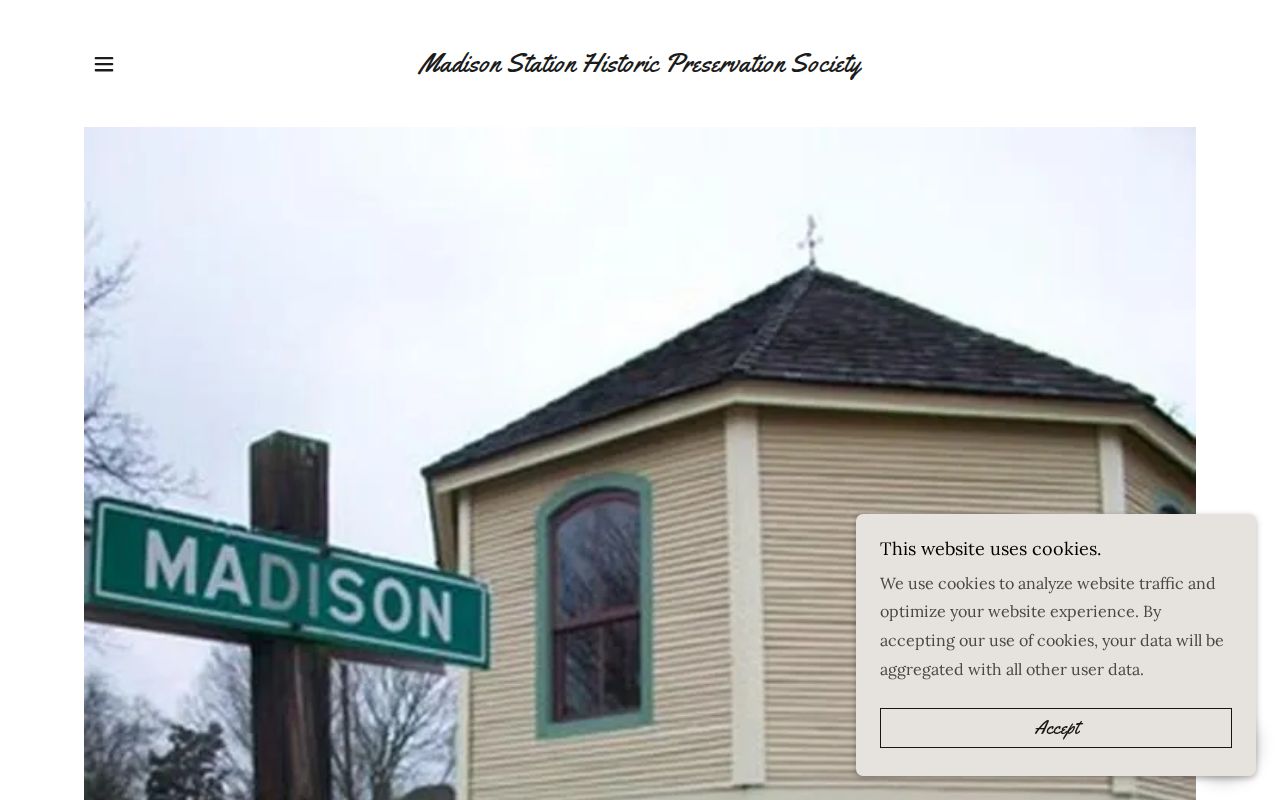
The preservation society's focus on Madison Station adds the local street and house context that countywide directories alone cannot supply.